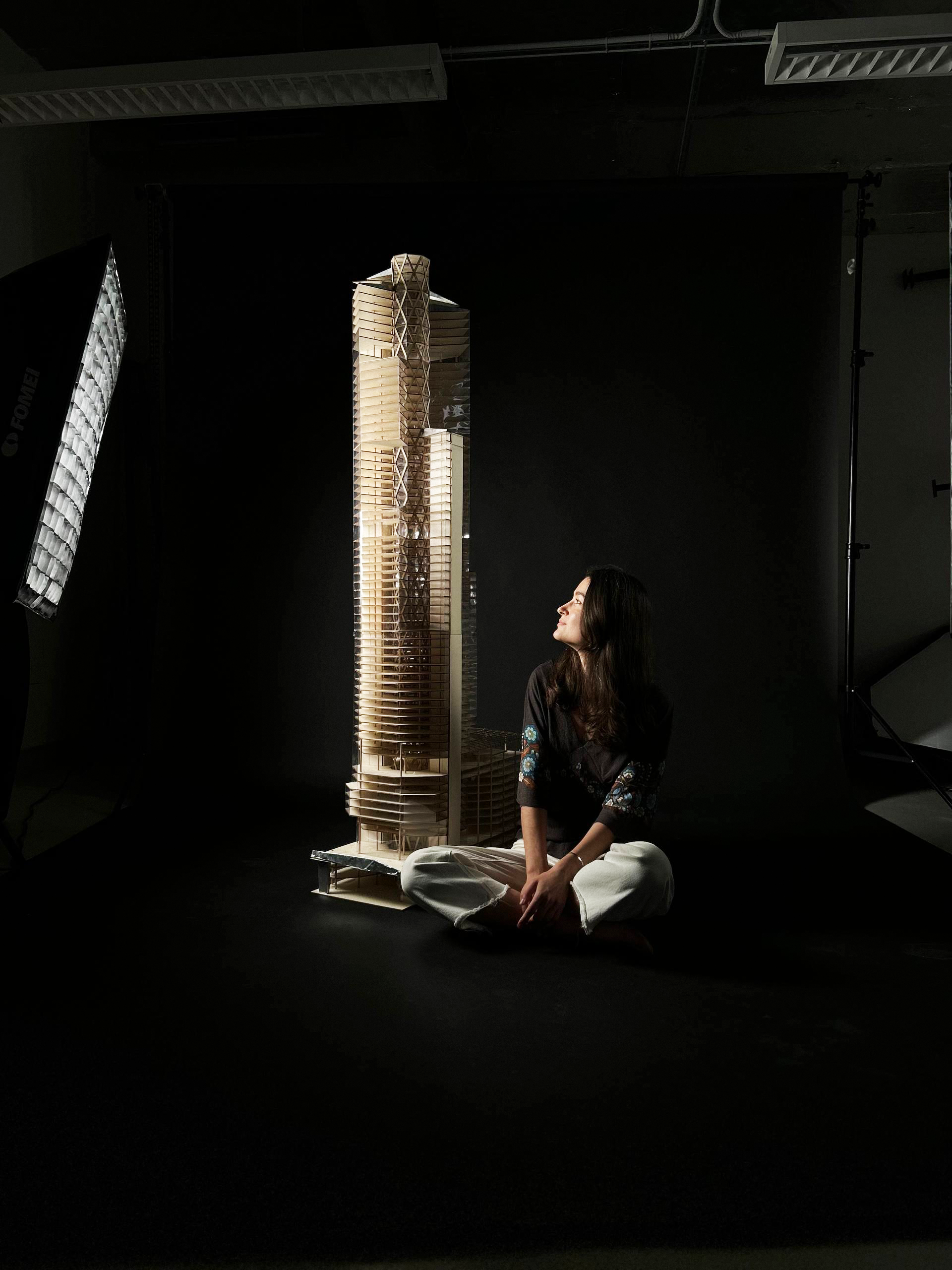
4th semestr project, 2026
Studio Achten-Pavlíček-Sýsová
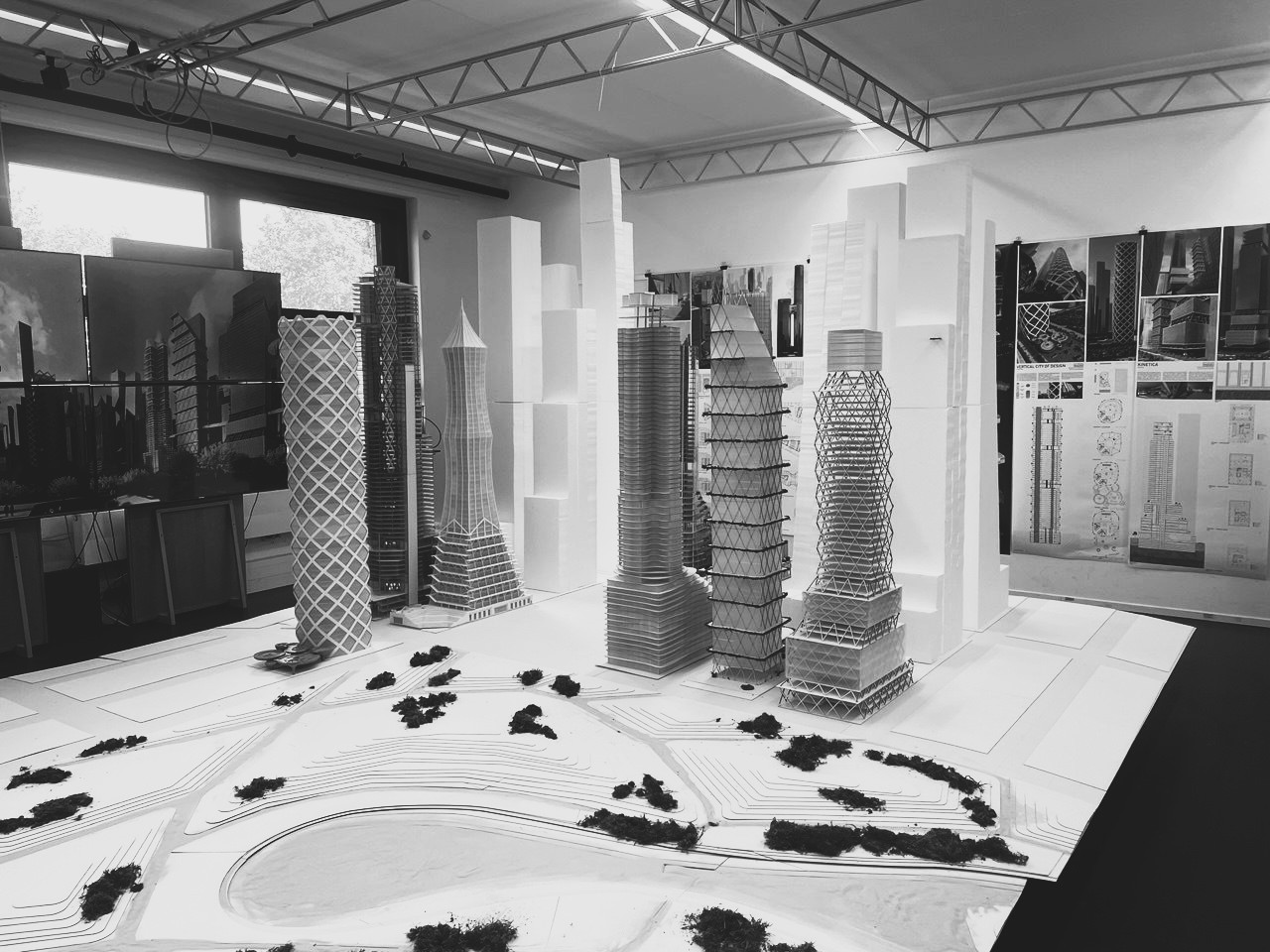
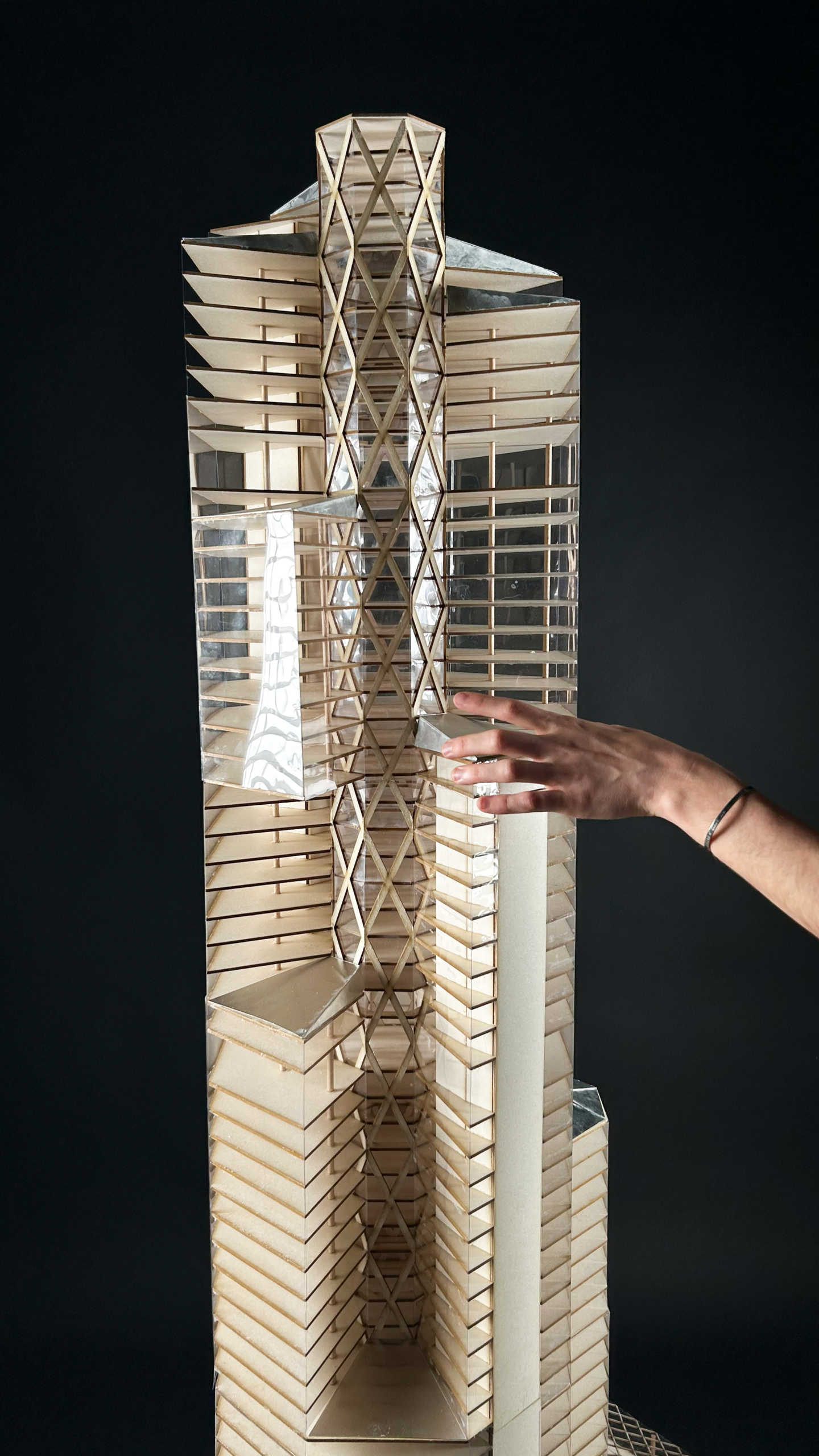
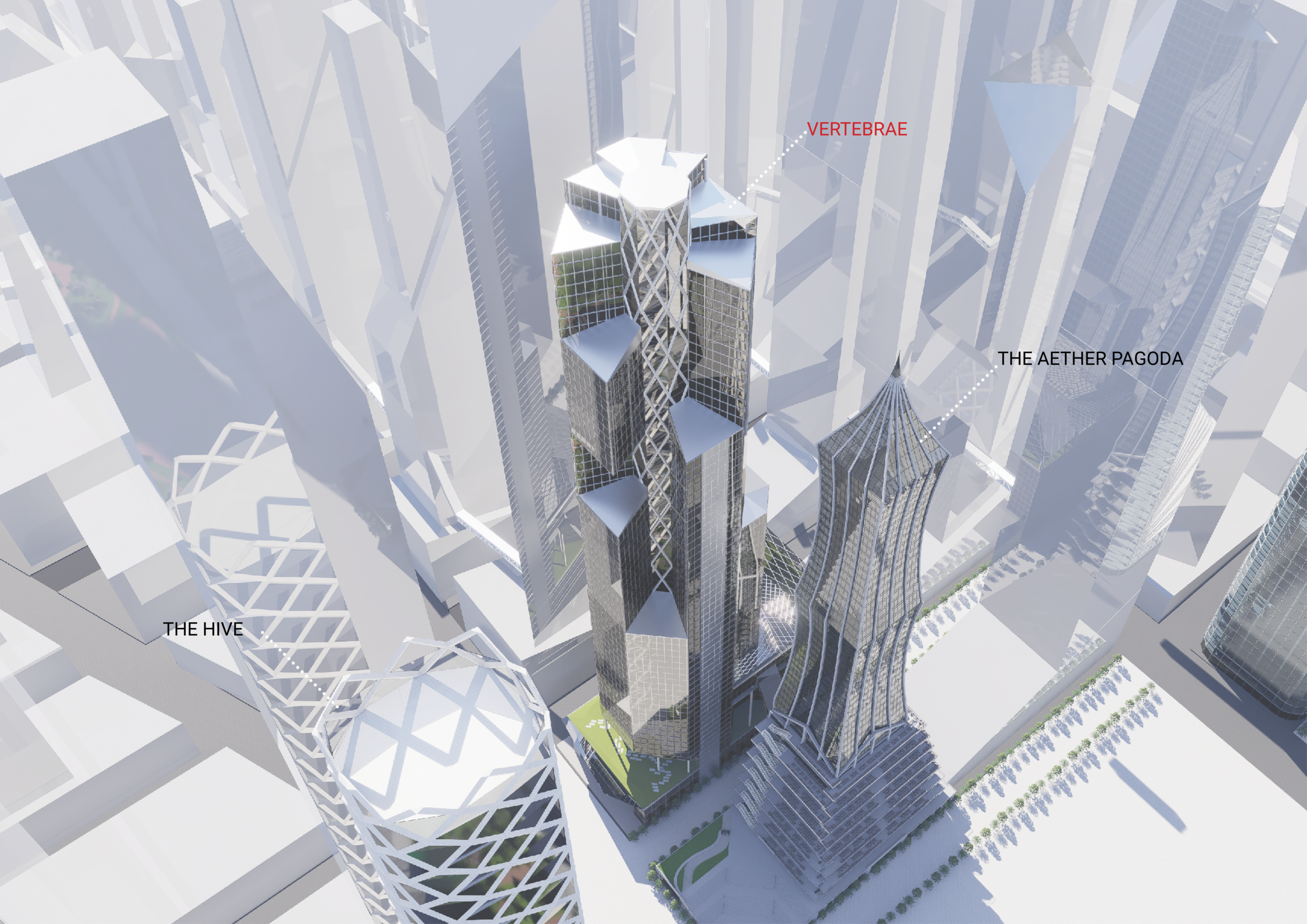
new type of a skycraper, vertical city in Shenzhen, Prague
cs version here
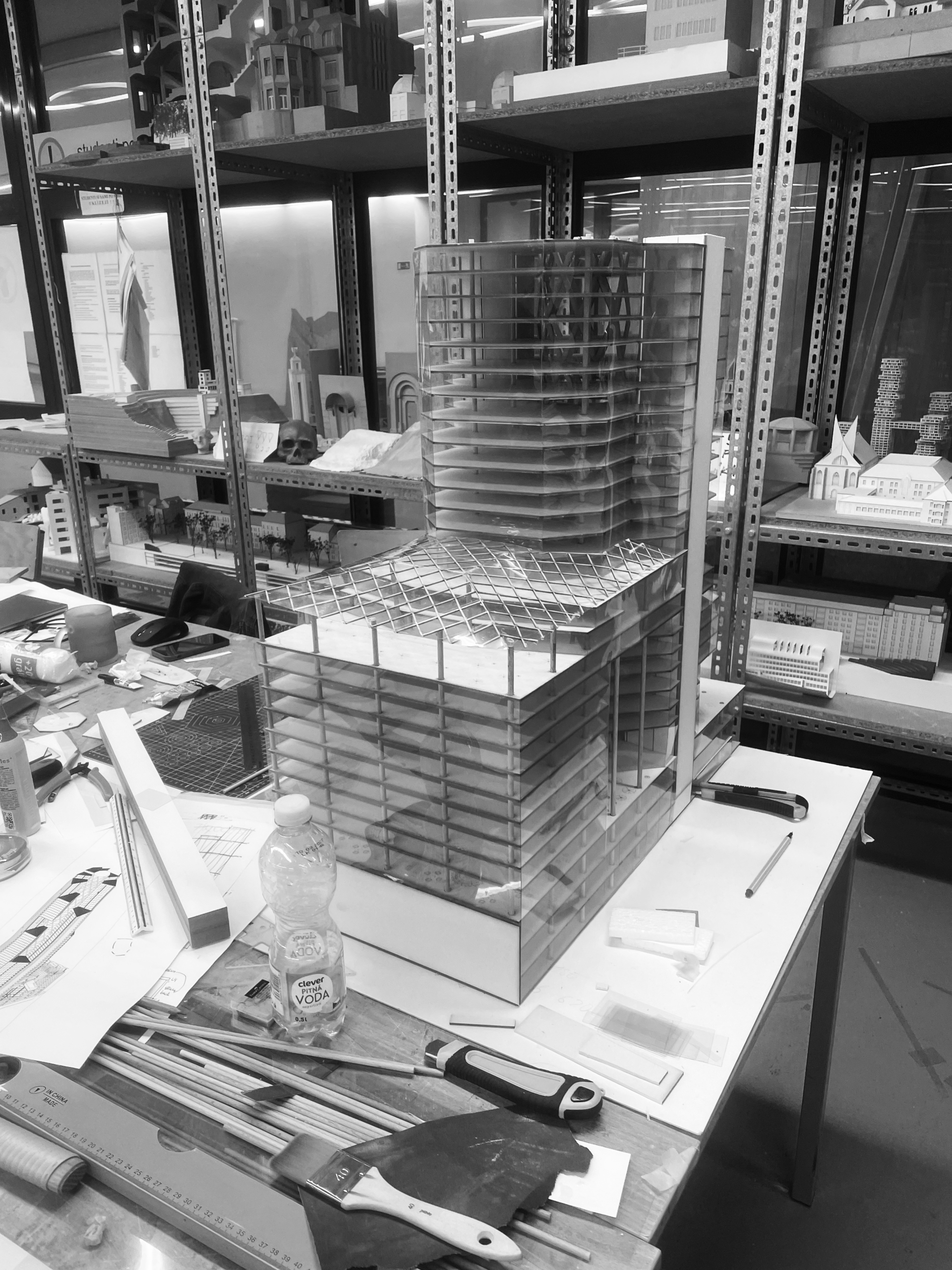
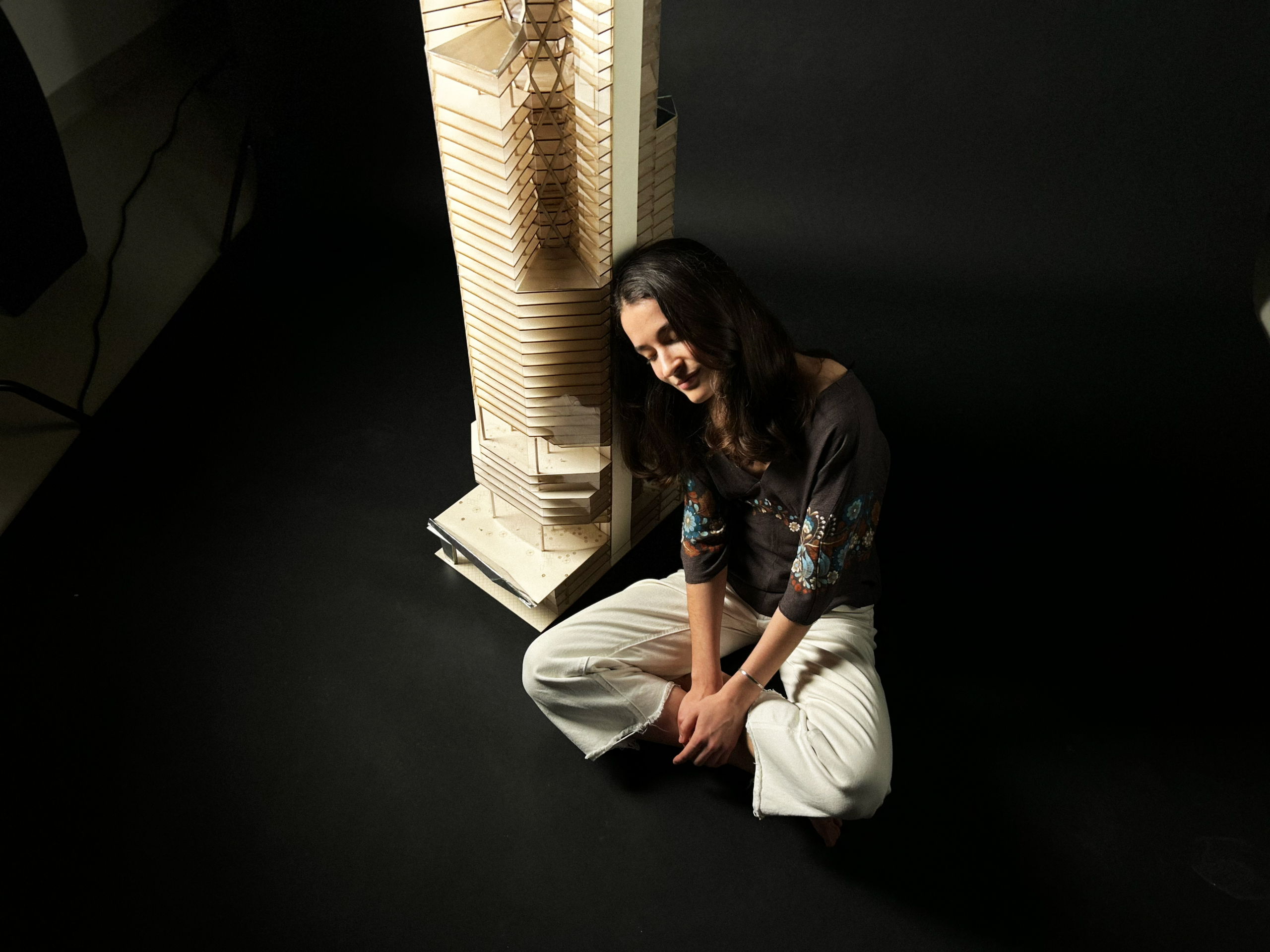
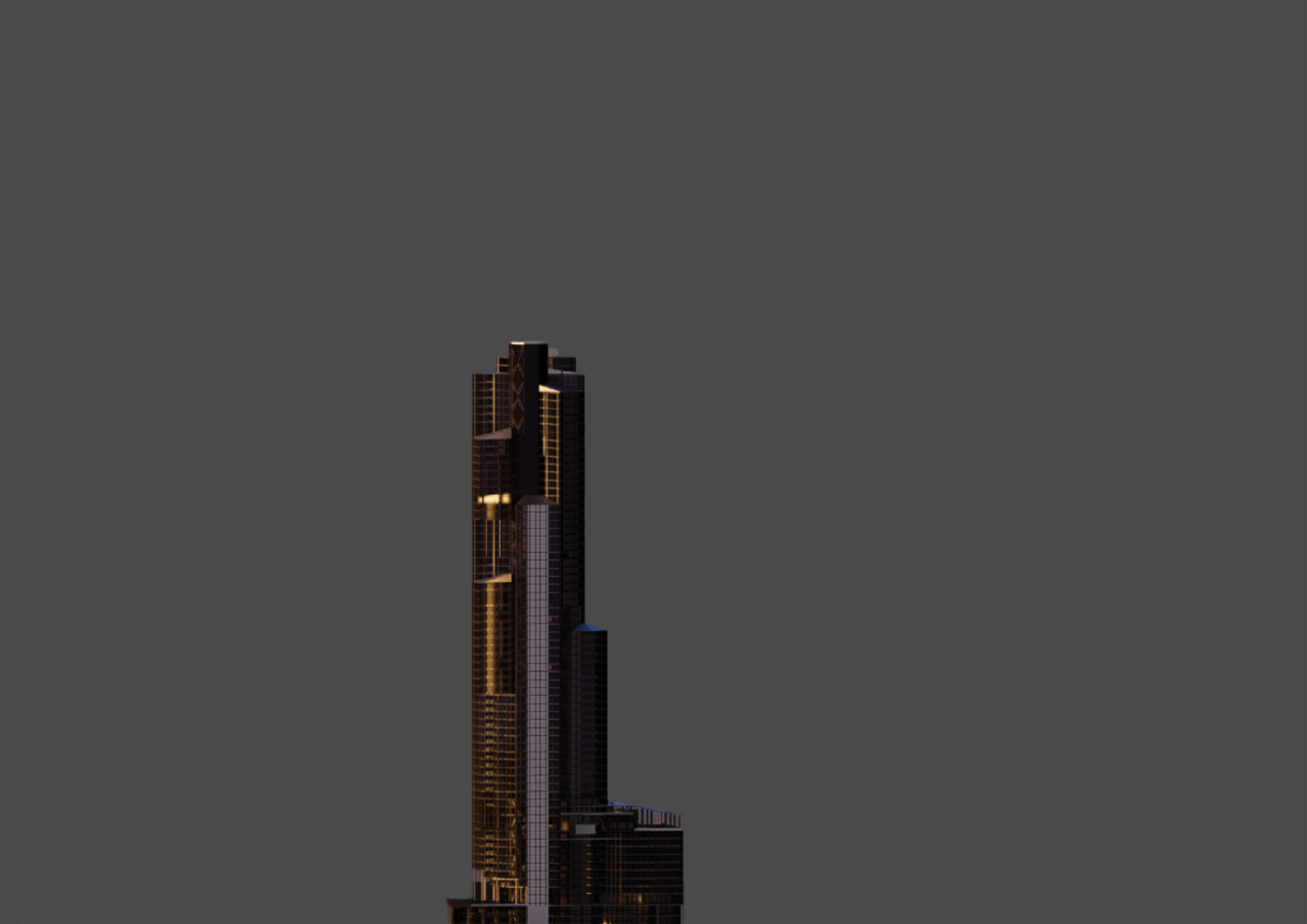
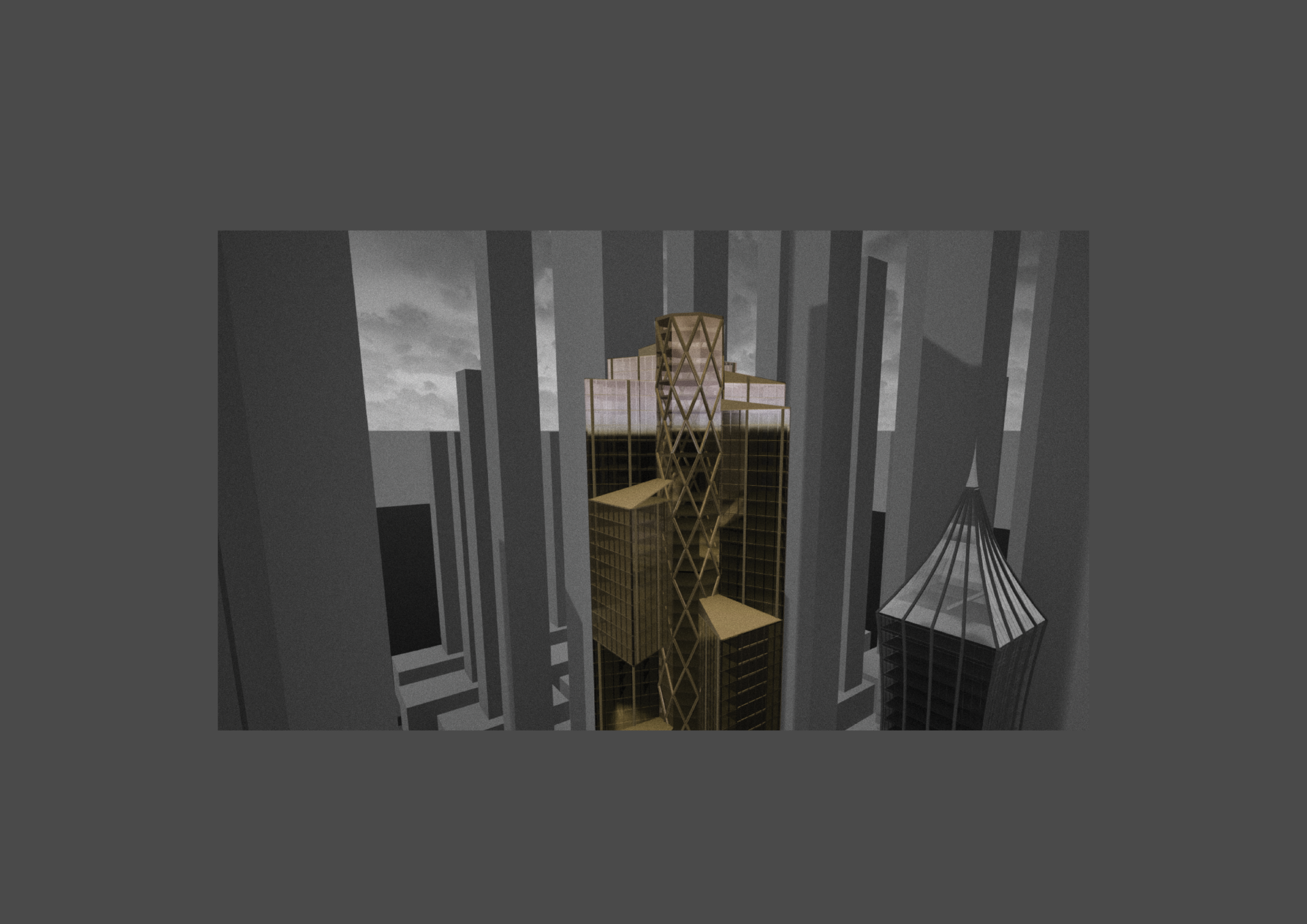
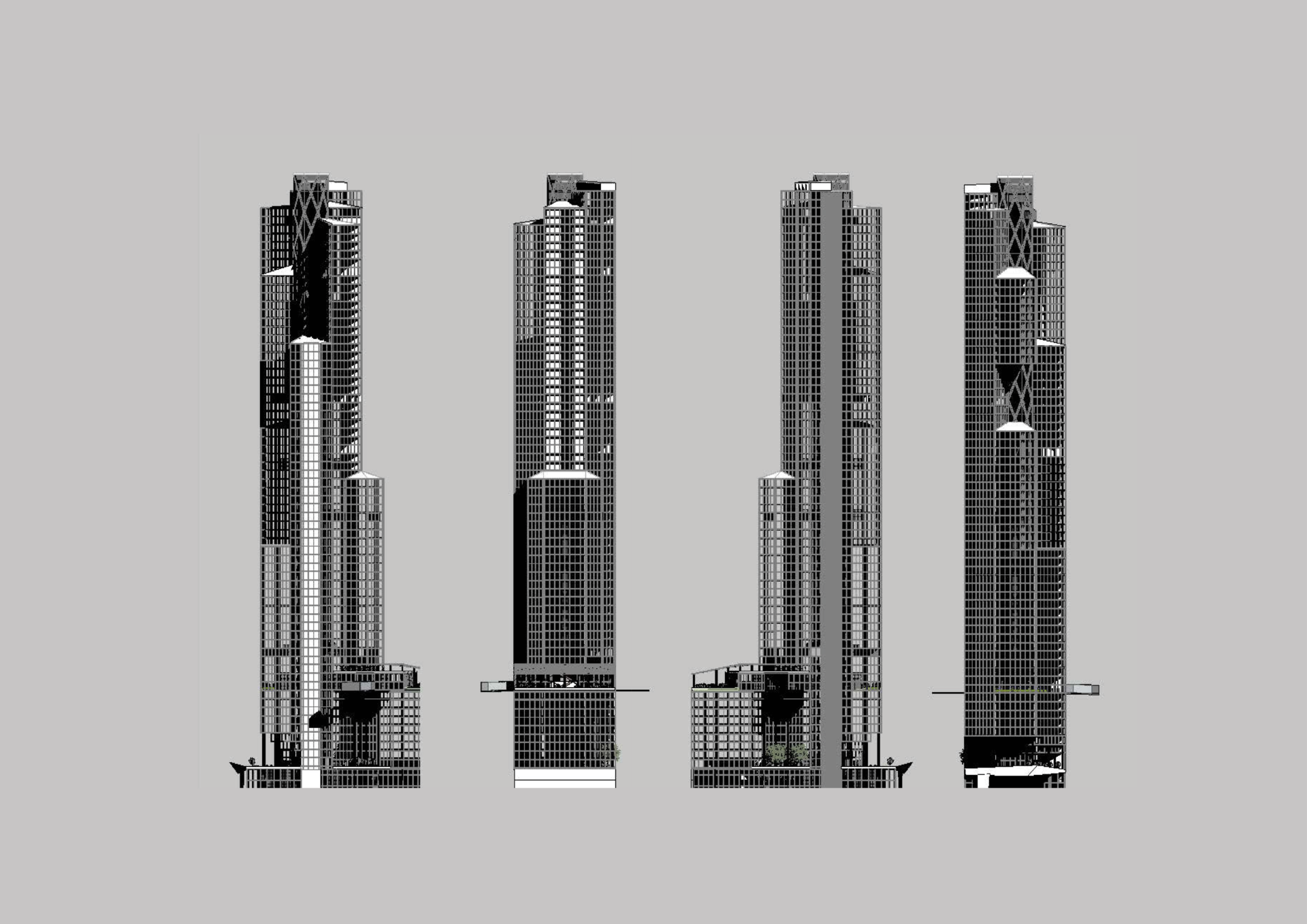
The most challenging project I’ve worked on so far in terms of scale, dedication, and sheer volume of work. Designing a skyscraper introduced me to an entirely new way of thinking—faster, bigger, and more demanding than anything I had experienced before. The result of my first all-nighters, hard work, and a vision of how such a big building could still be human-based.
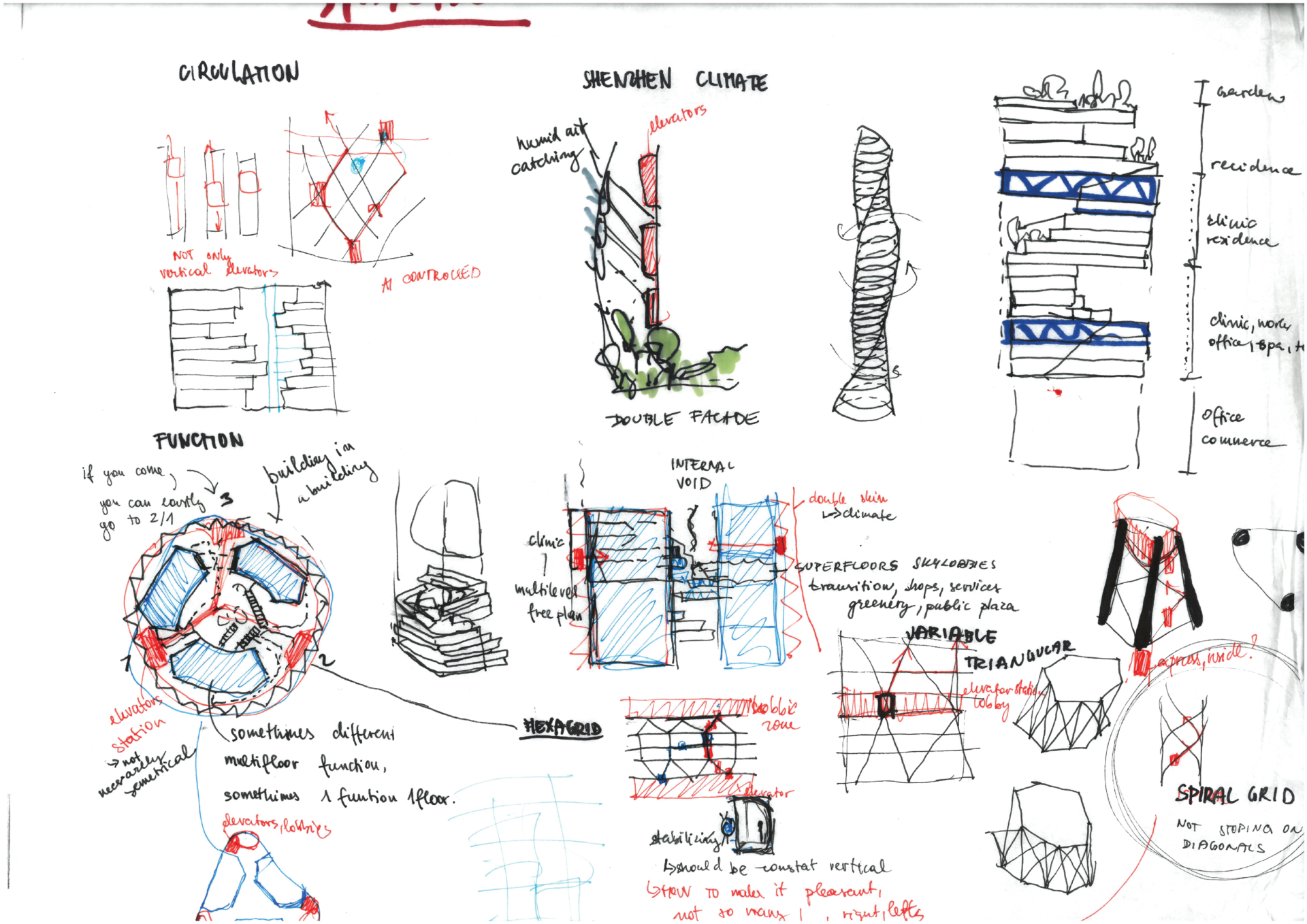

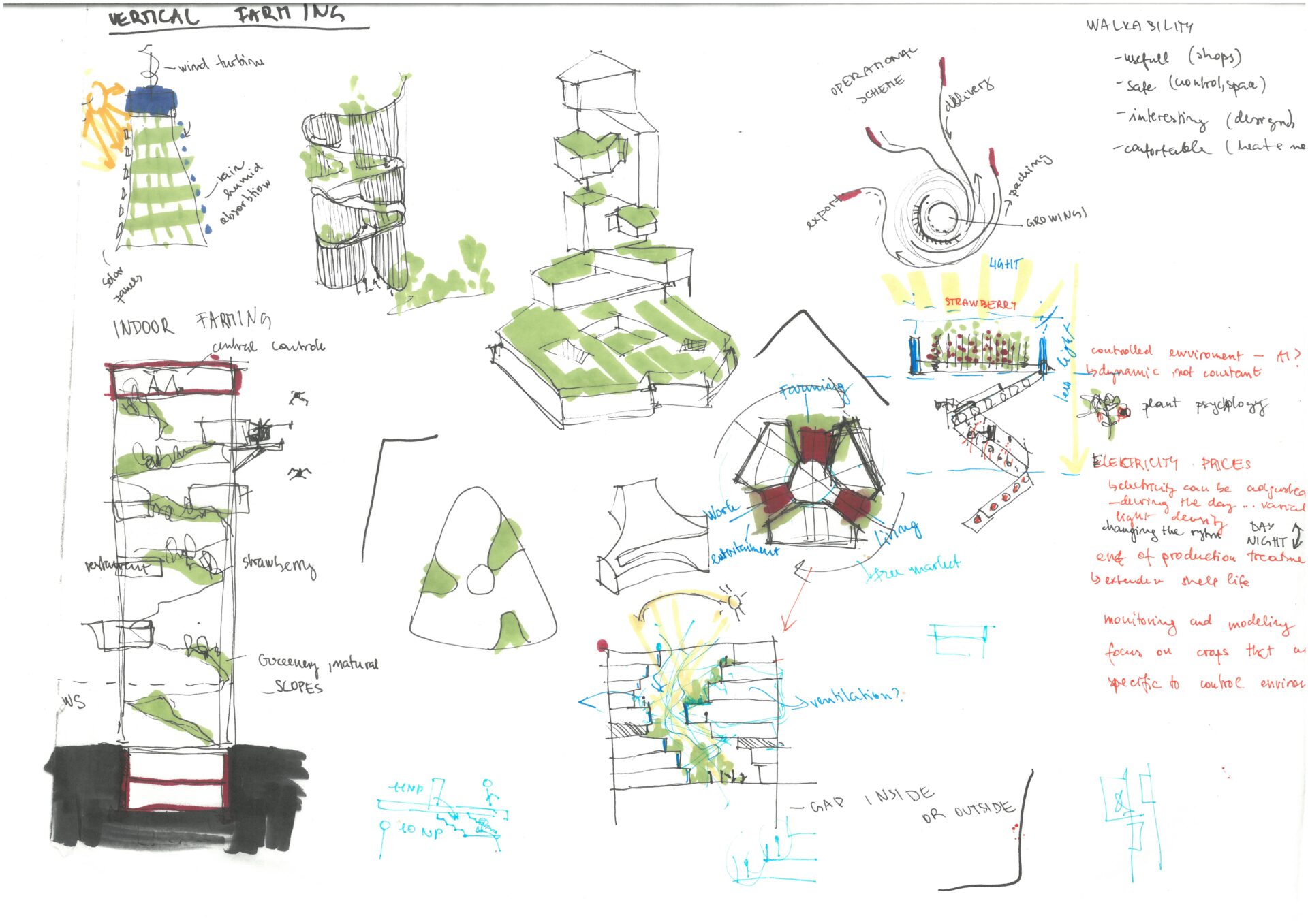
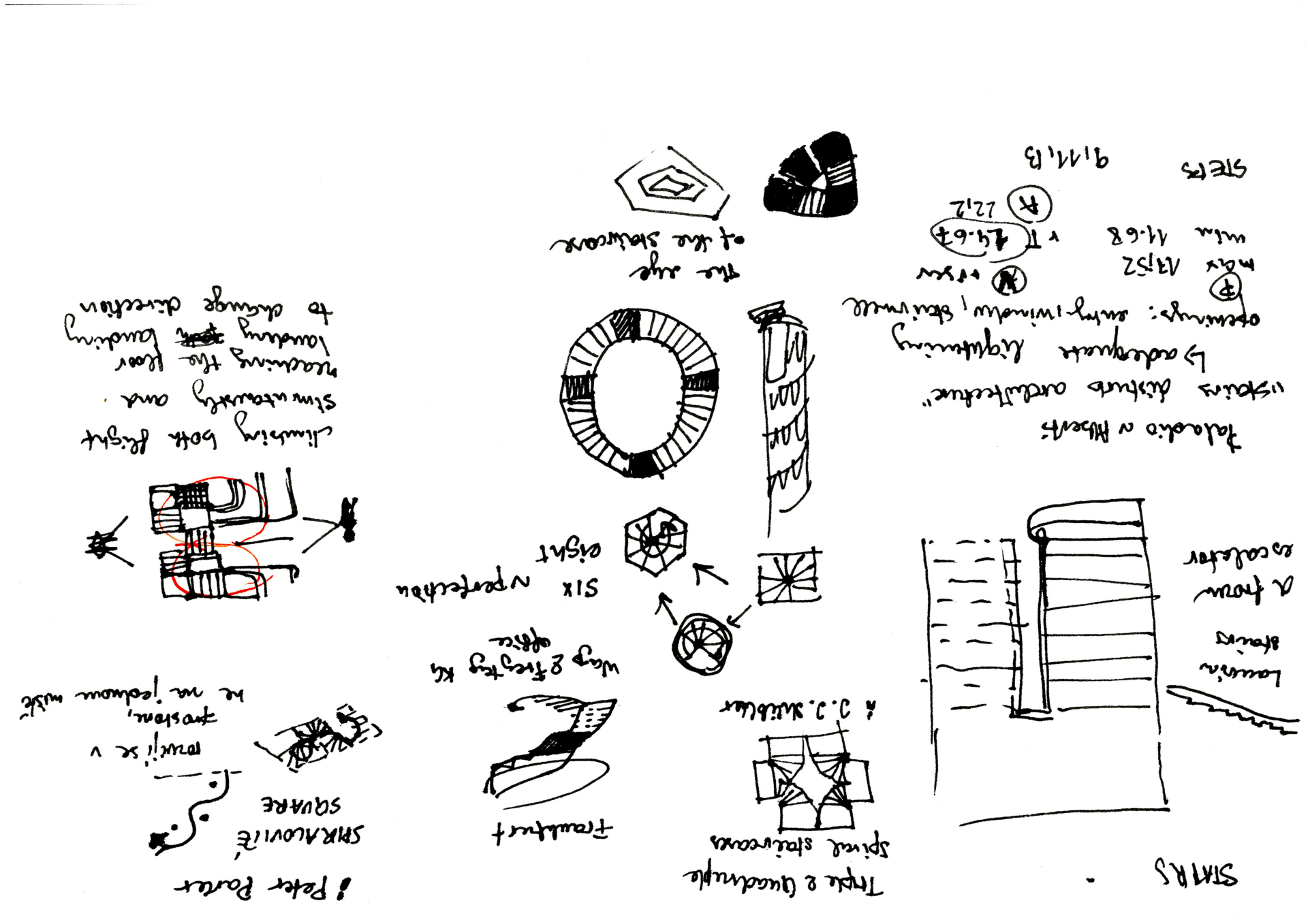
I enjoyed the research part, where, together with my studio colleagues, we did a huge amount of work documenting how a skyscraper works. Then came my personal research on what could be the basis for our quickly developing AI future. I sketched and read a lot during that phase.
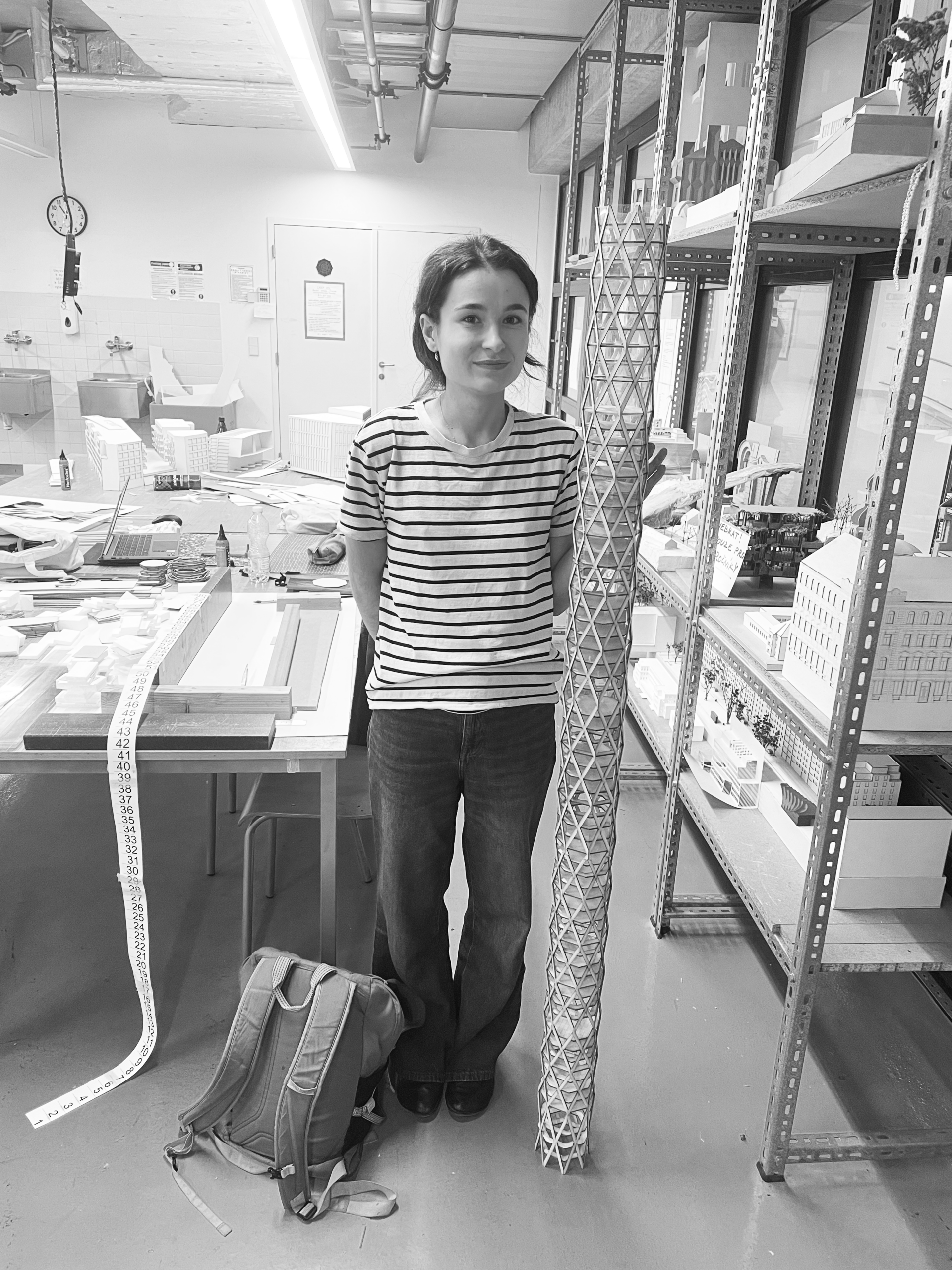
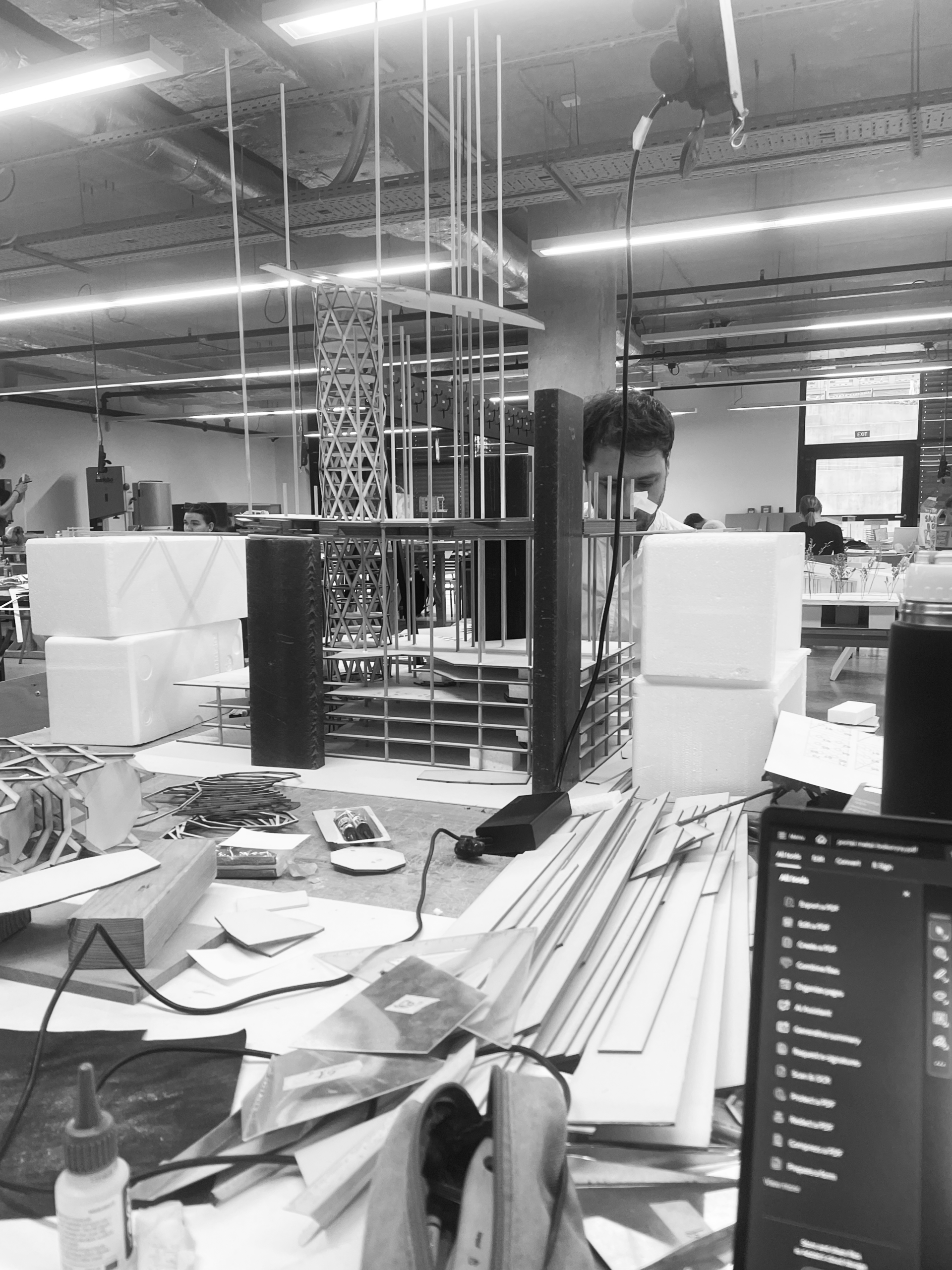
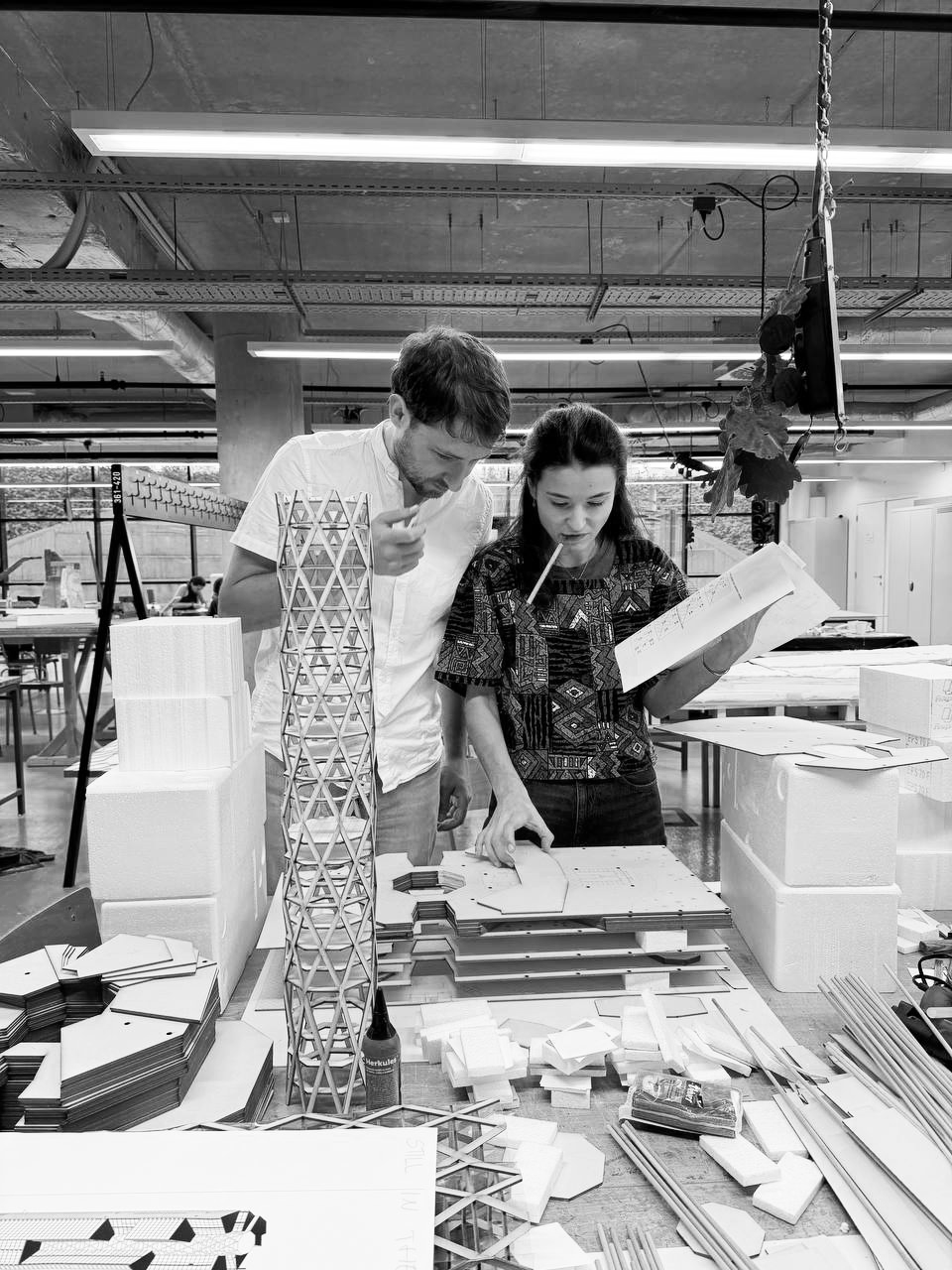
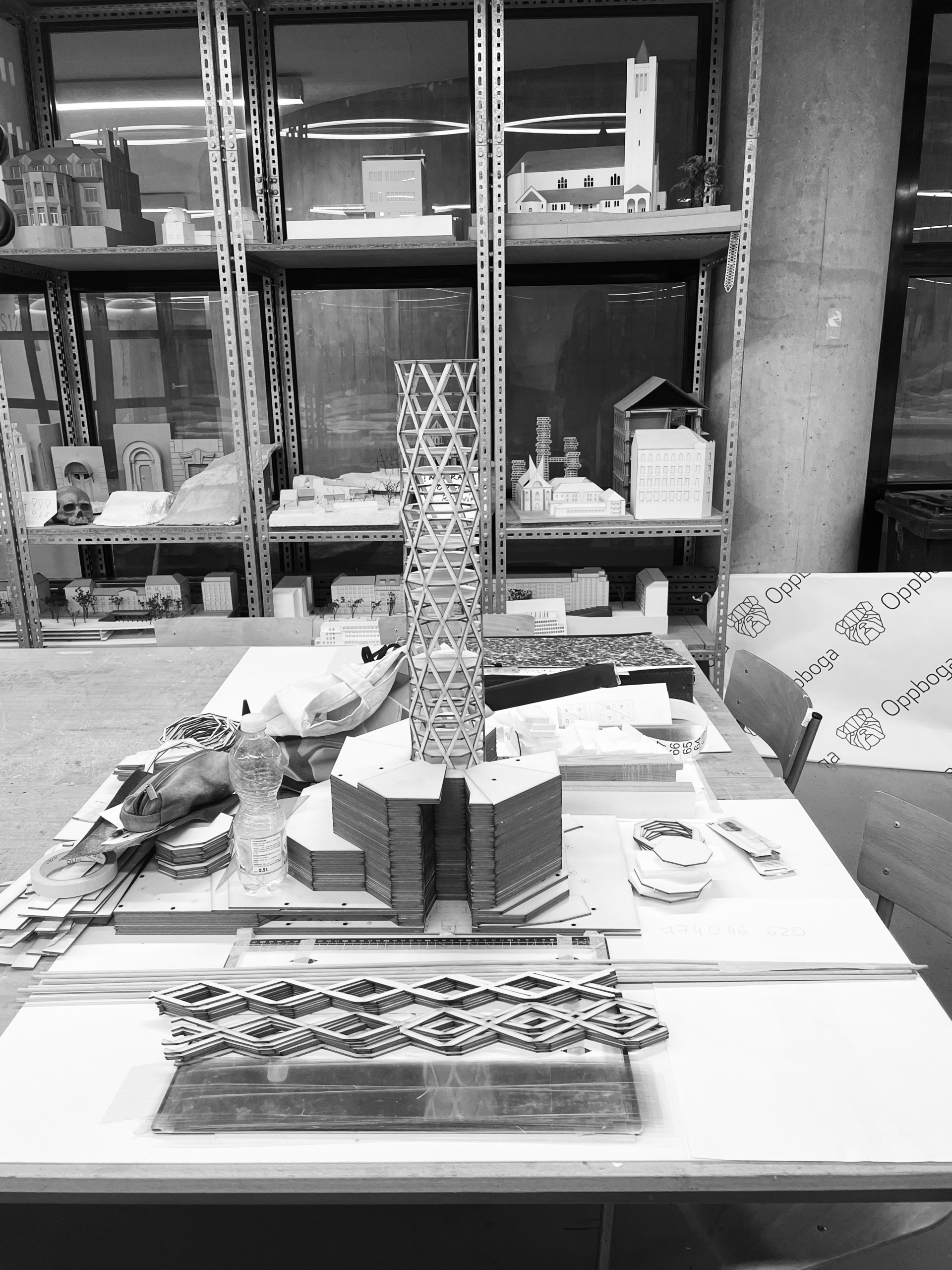
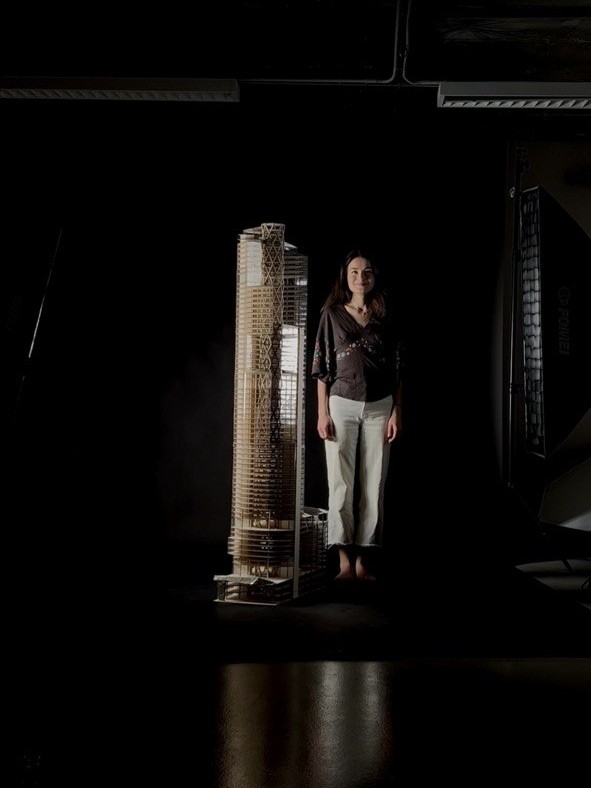
A huge lesson was changing the design four weeks before the deadline. Already with the main floor plans done and the main idea in place, I wasn’t happy with the shape. It just wasn’t right. I don’t regret it at all. I kept exploring, I kept learning. The result might still not be the best, but the lesson was learned: to follow my inner self despite the fear of missing the deadline. For a person who is highly responsible and organized, this was huge. I am thankful I managed to produce the work that was needed, not without the help of my closest person during the last week. The physical model is alive thanks to him.
An important part of the work in the studio was to work with AI, so among the deliverables was an AI documentation, which can be seen at the end of this page.

WHY AND HOW
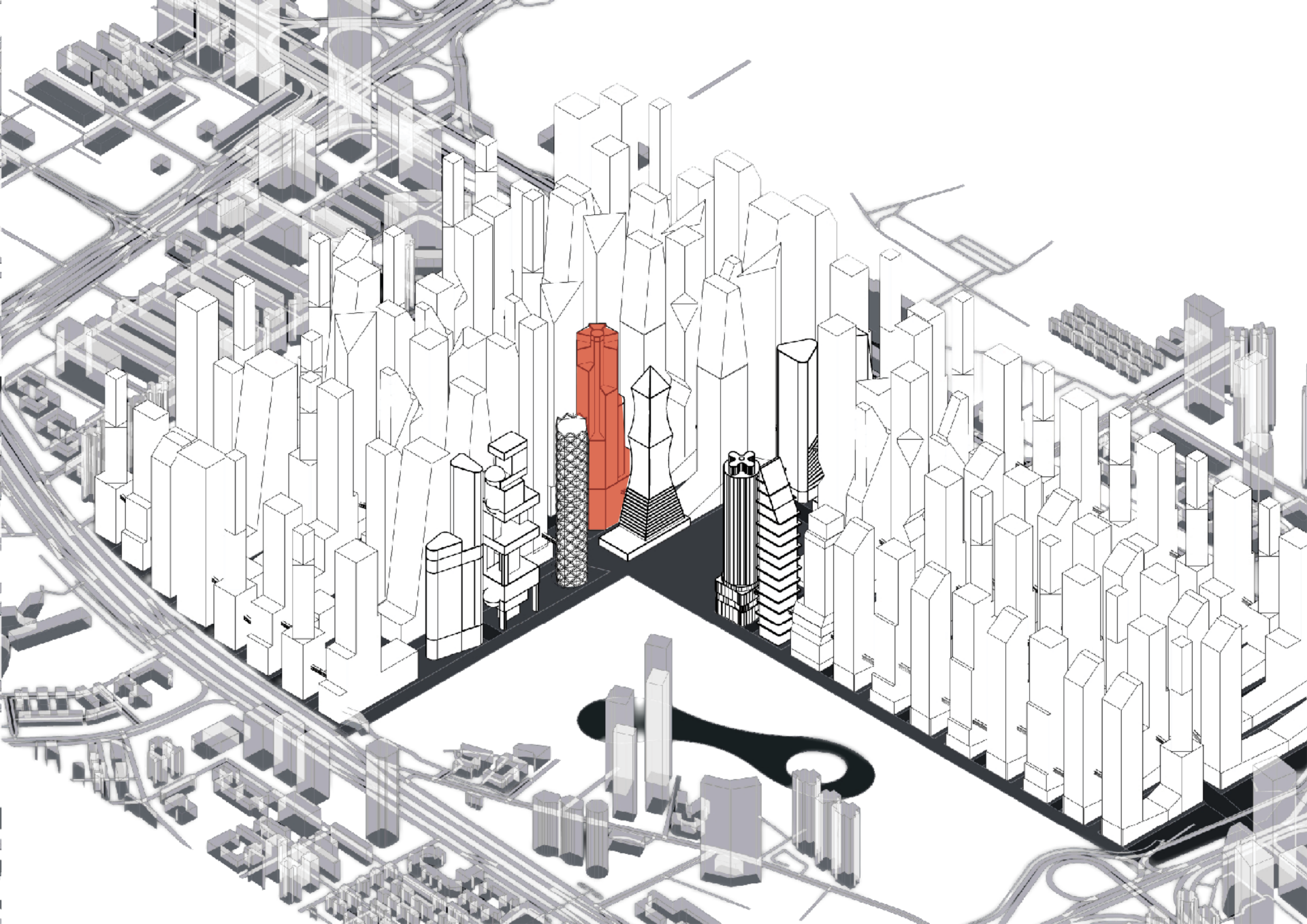
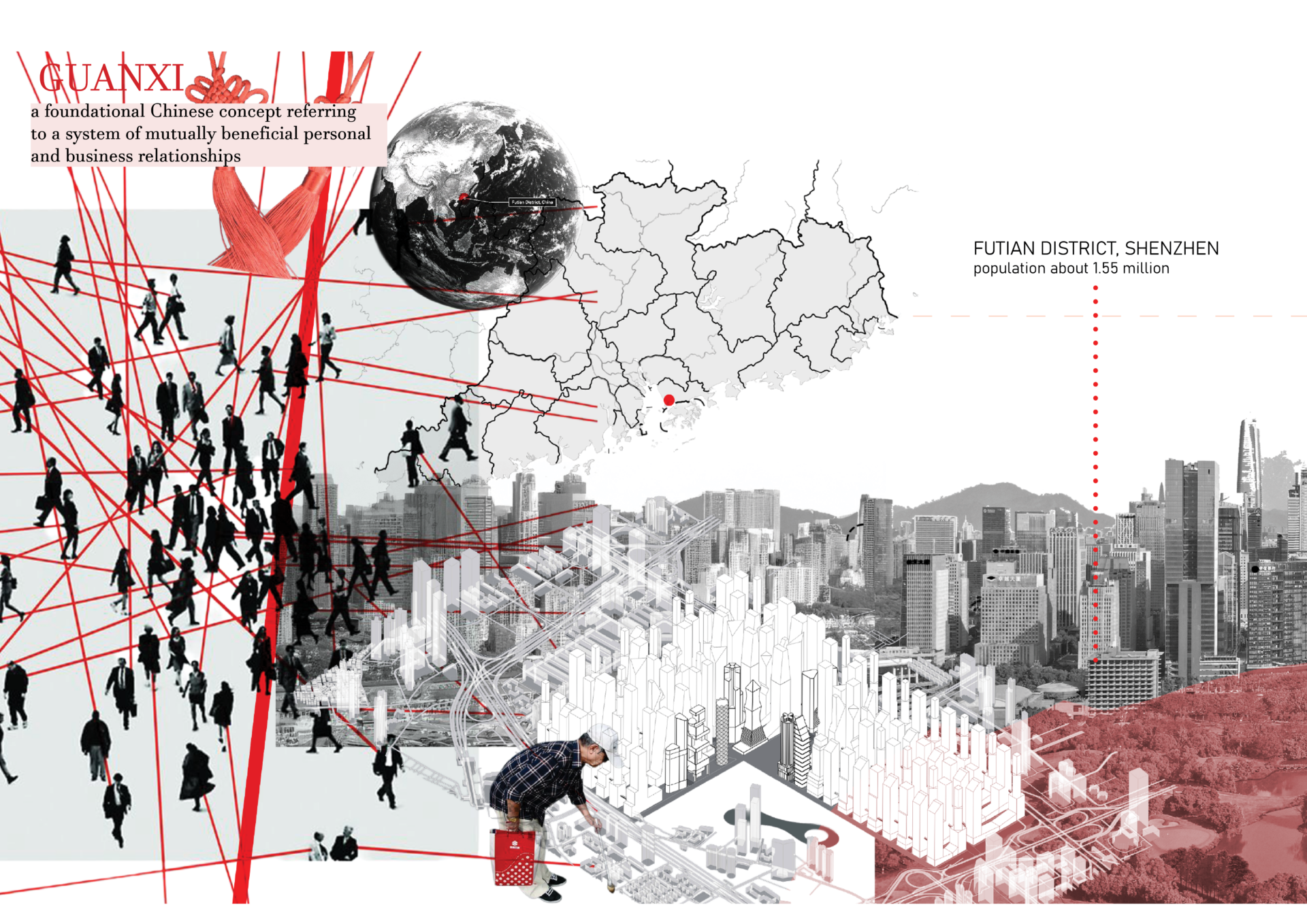
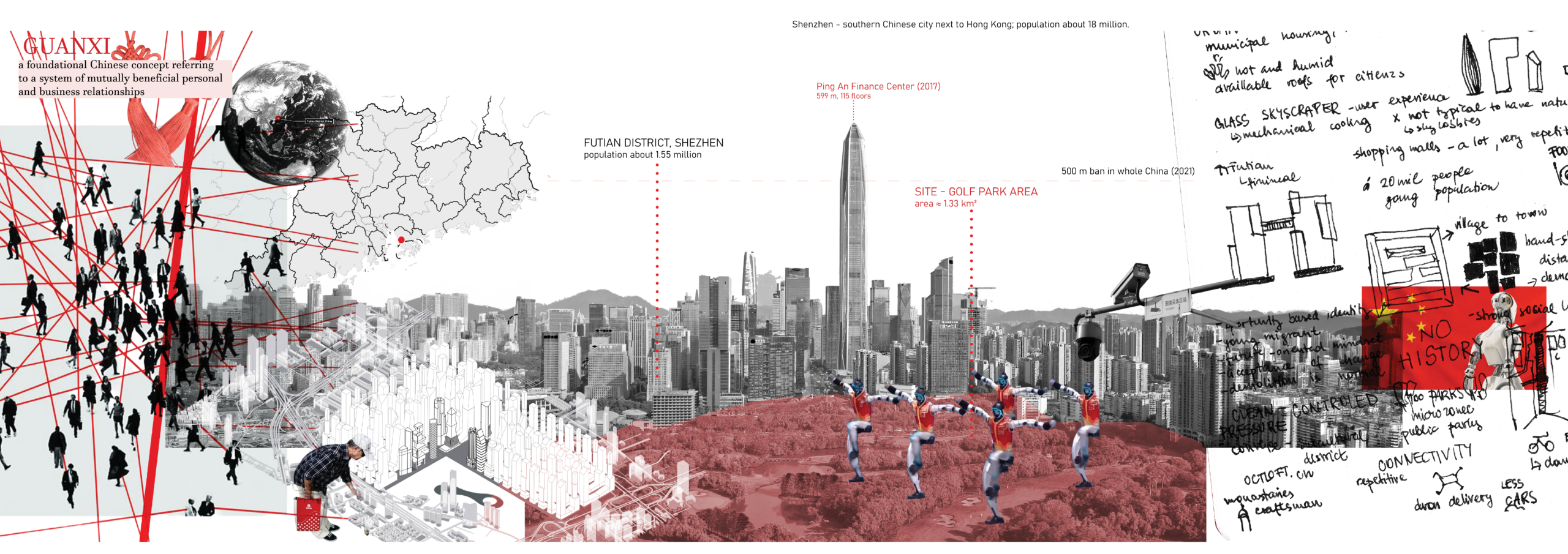
From a fishing village to a futuristic experiment as a Special Economic Zone, Shenzhen appeared to me at first with covered eyes. Objectively, because when searching on Google Maps, one cannot truly see the city. Subjectively, because before February 2026, I knew almost nothing about it.
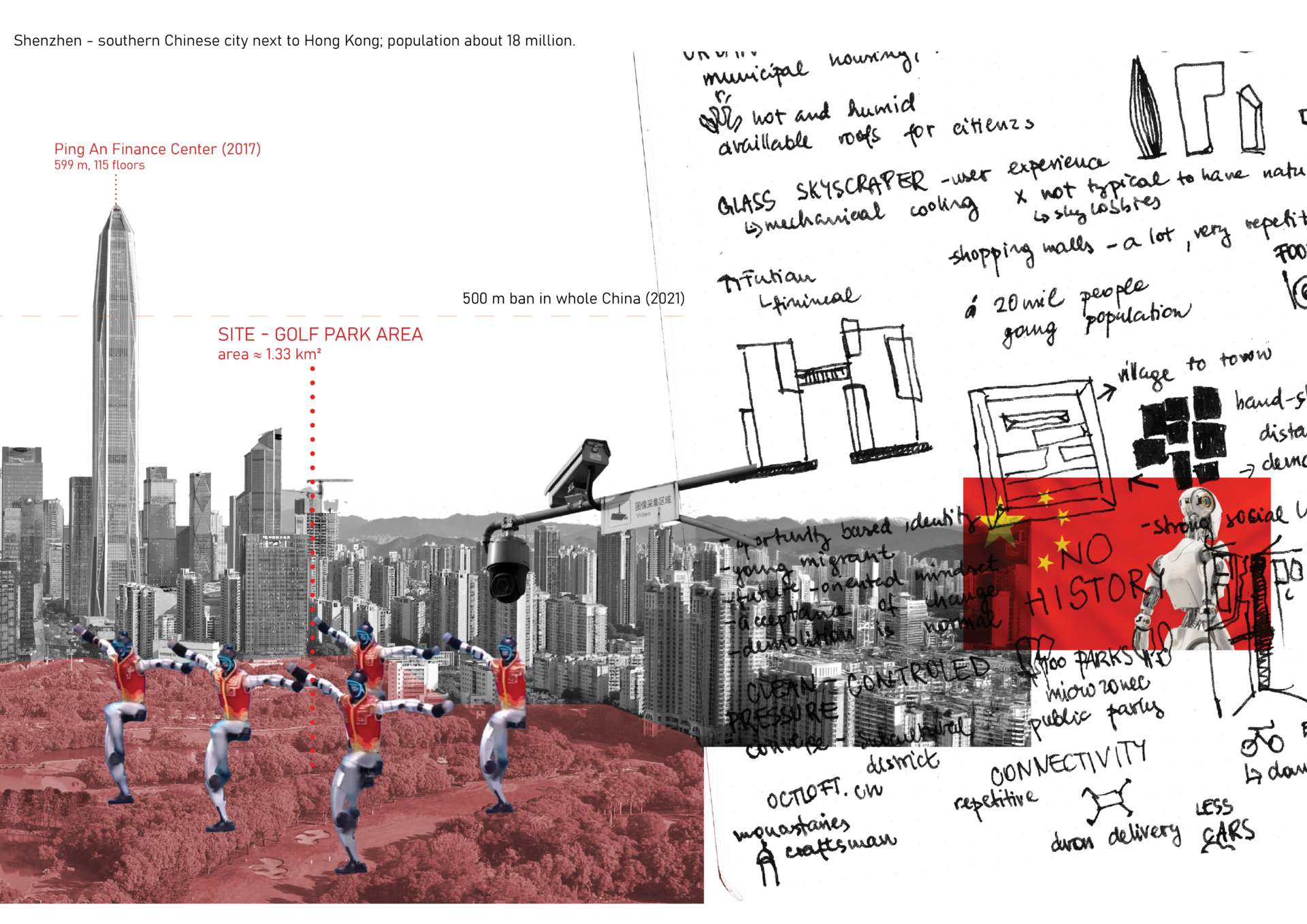
This project does not work with context in the way we are used to. I do not emphasize Chinese history, cultural memory, or historical values. I do not underline traditional Chinese architectural forms. Because how does one design in a city whose visible history is barely older than thirty years, and which transforms itself every five years?
In Shenzhen, the future is not just a word in a dictionary, nor only a political tool. From what I have watched, read, and discussed, the main — perhaps the only — value here is change. There is an oxymoronic relationship in China between government control and economic freedom within the Special Economic Zones. Shenzhen is one of its protagonists, and my European mind struggles to fully understand it. The relevant question for me is: what are, and what will be, the values of a future where identity is shaped by opportunity, constant transformation, and the absence of deep historical references? What will fulfill human needs? Will architecture still be needed? And if so, in what sense?
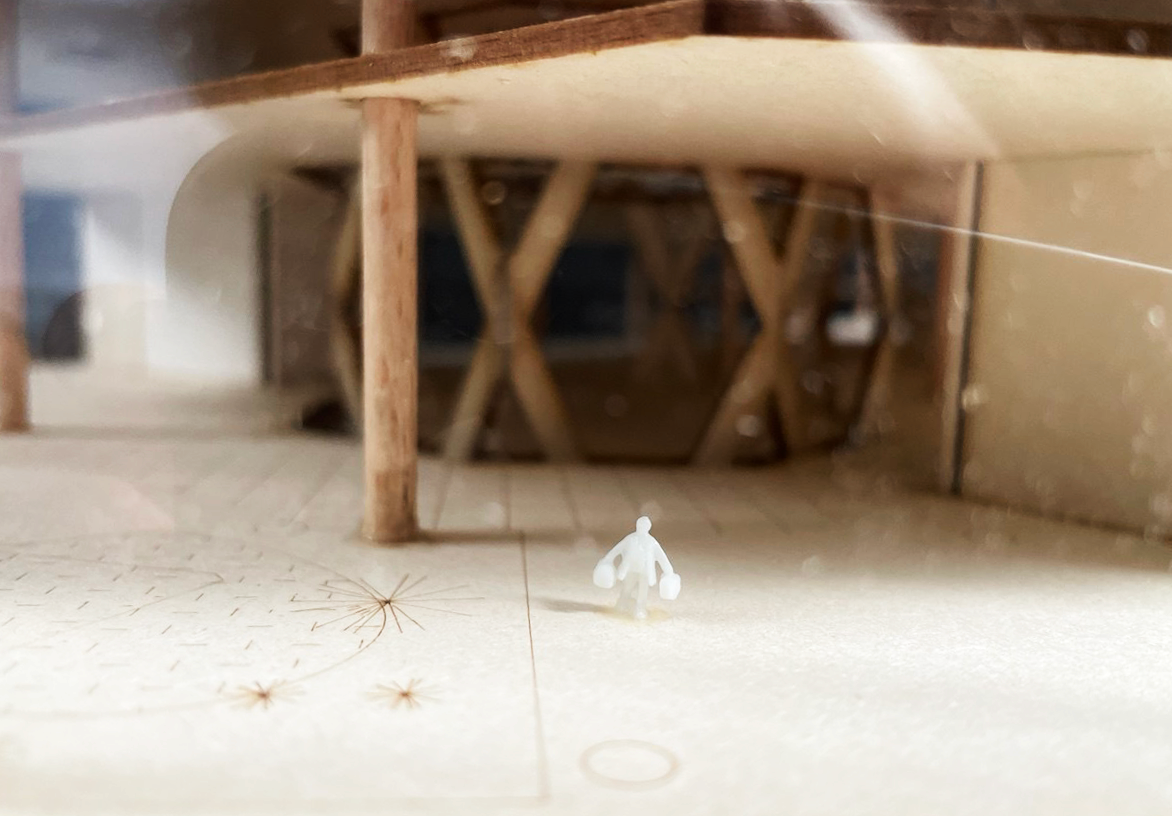
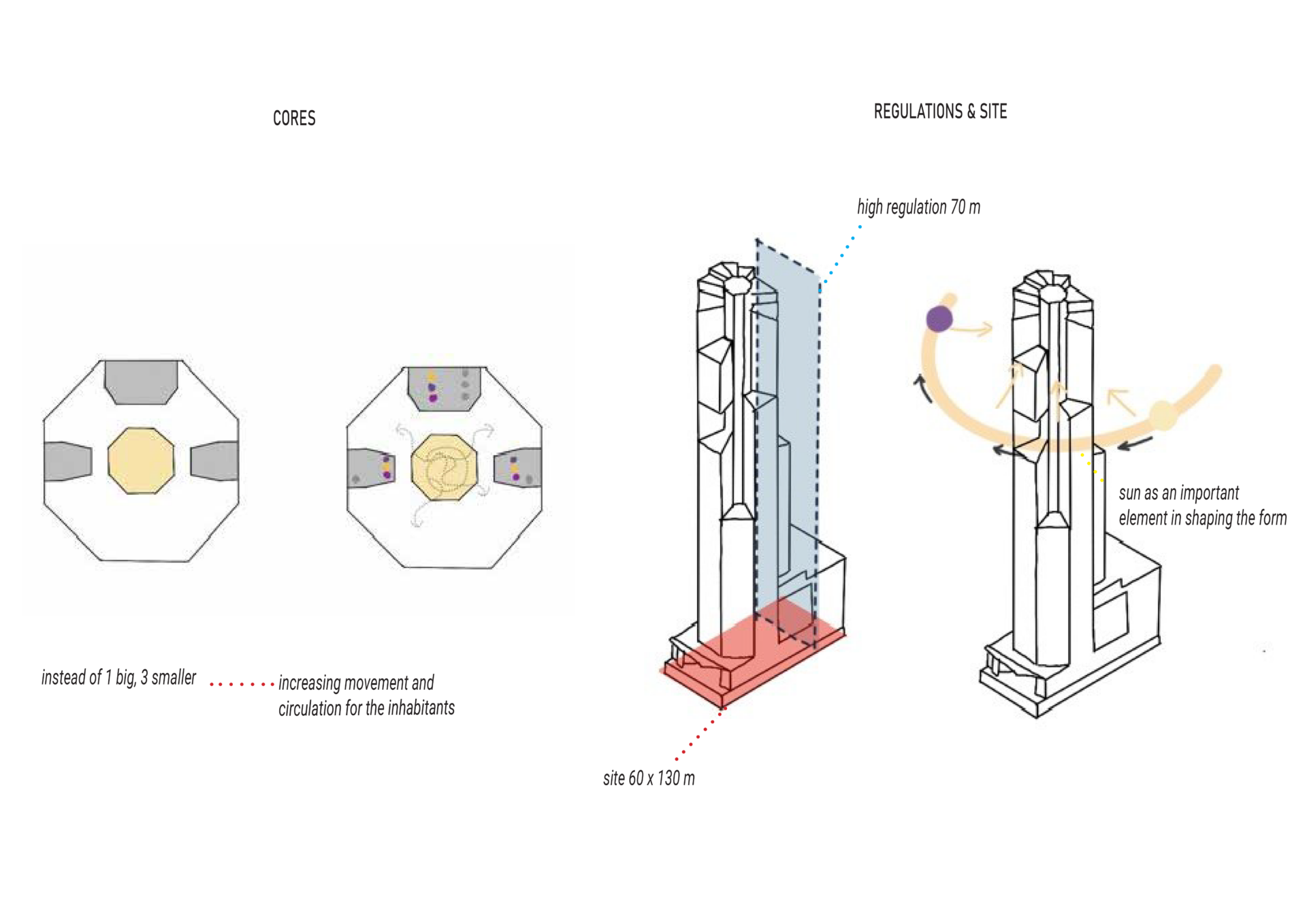
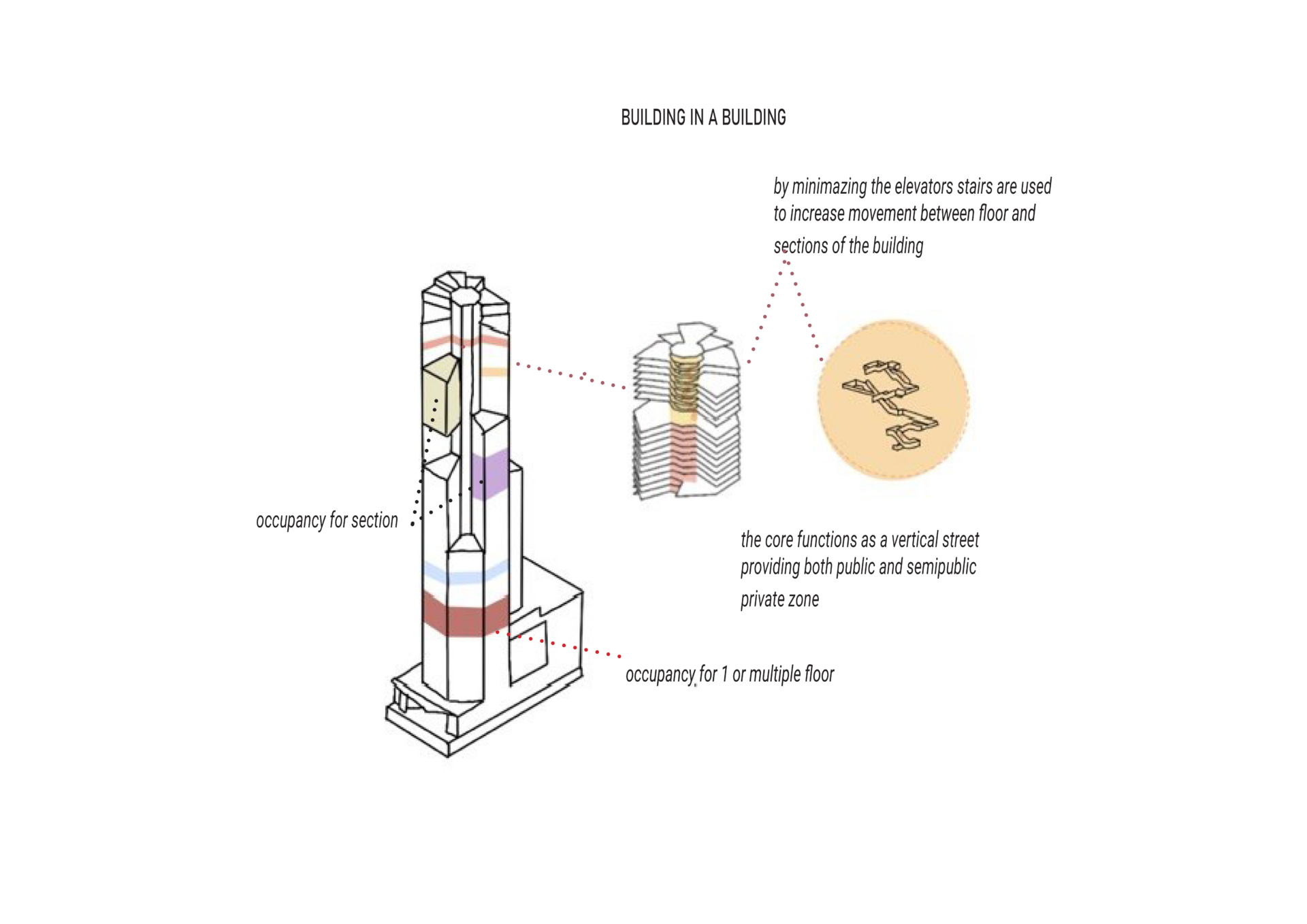
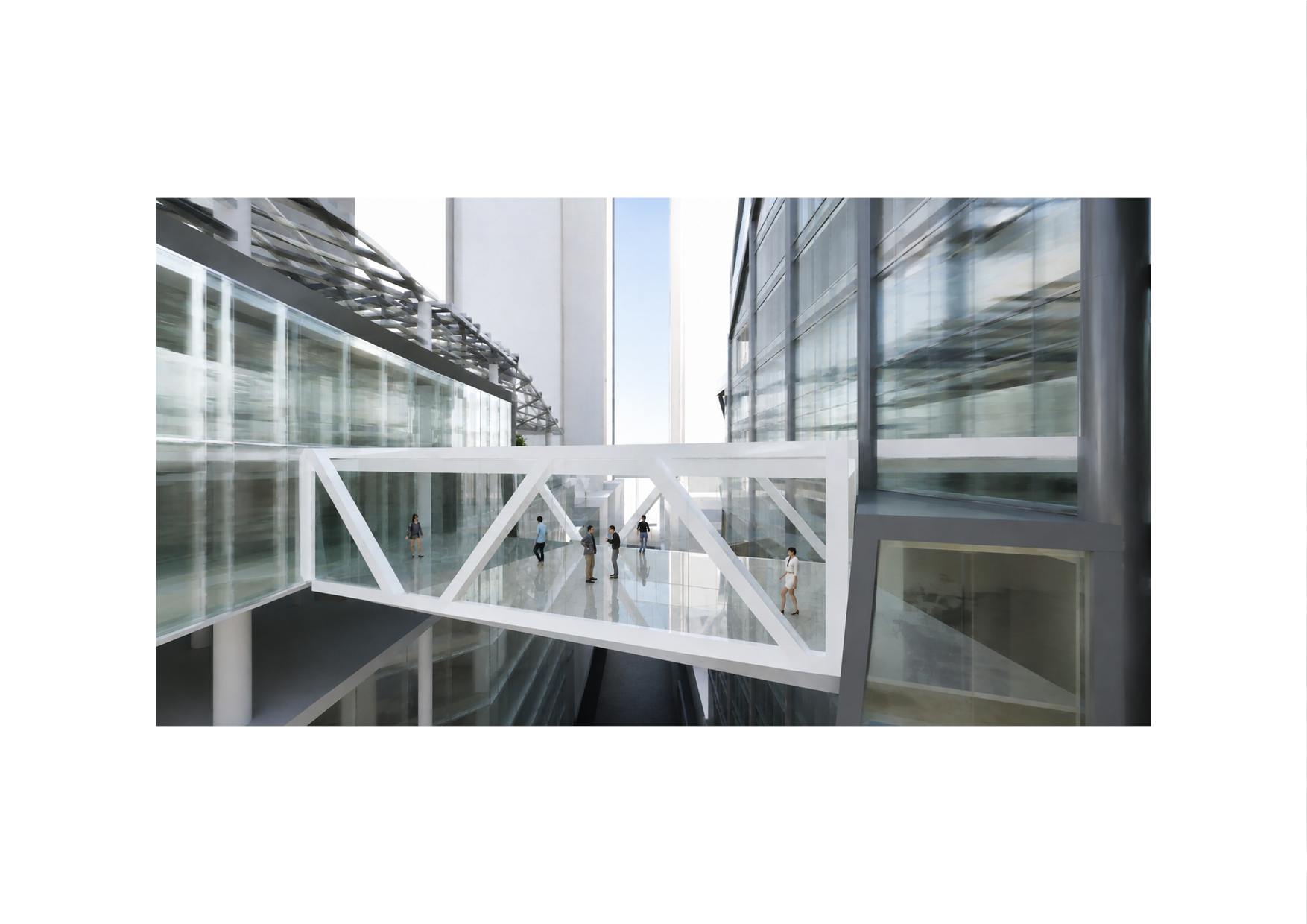
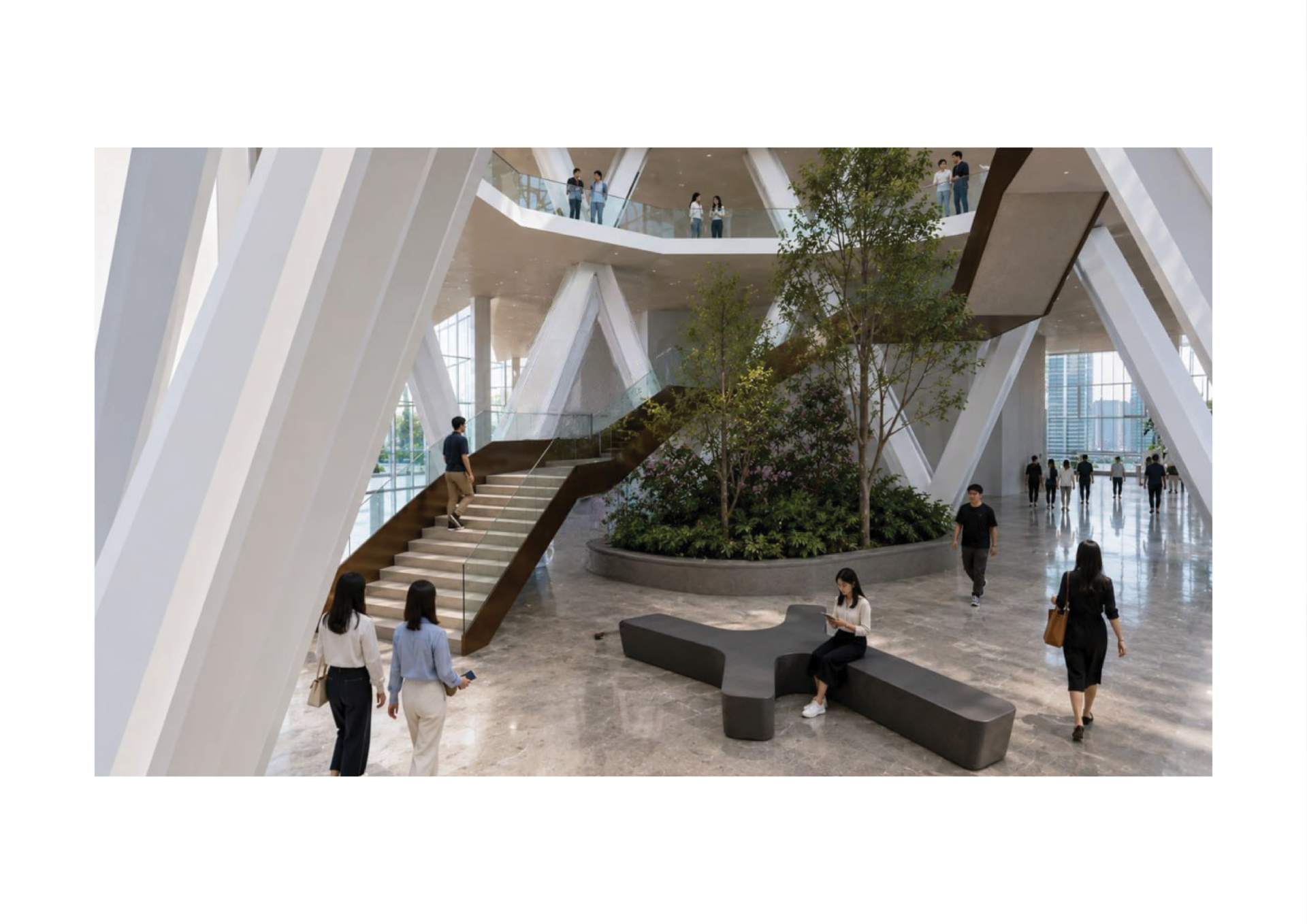
We can search for answers in technology — robots, drones, automation. Or we can search within the human scale. For some time still, we will have the sun, we will need air, and we will need movement. In an era of constant and rapid change, human movement is what makes a city breathe. And perhaps the constant acceptance of change becomes one of the primary needs of the human being.
PROCESS